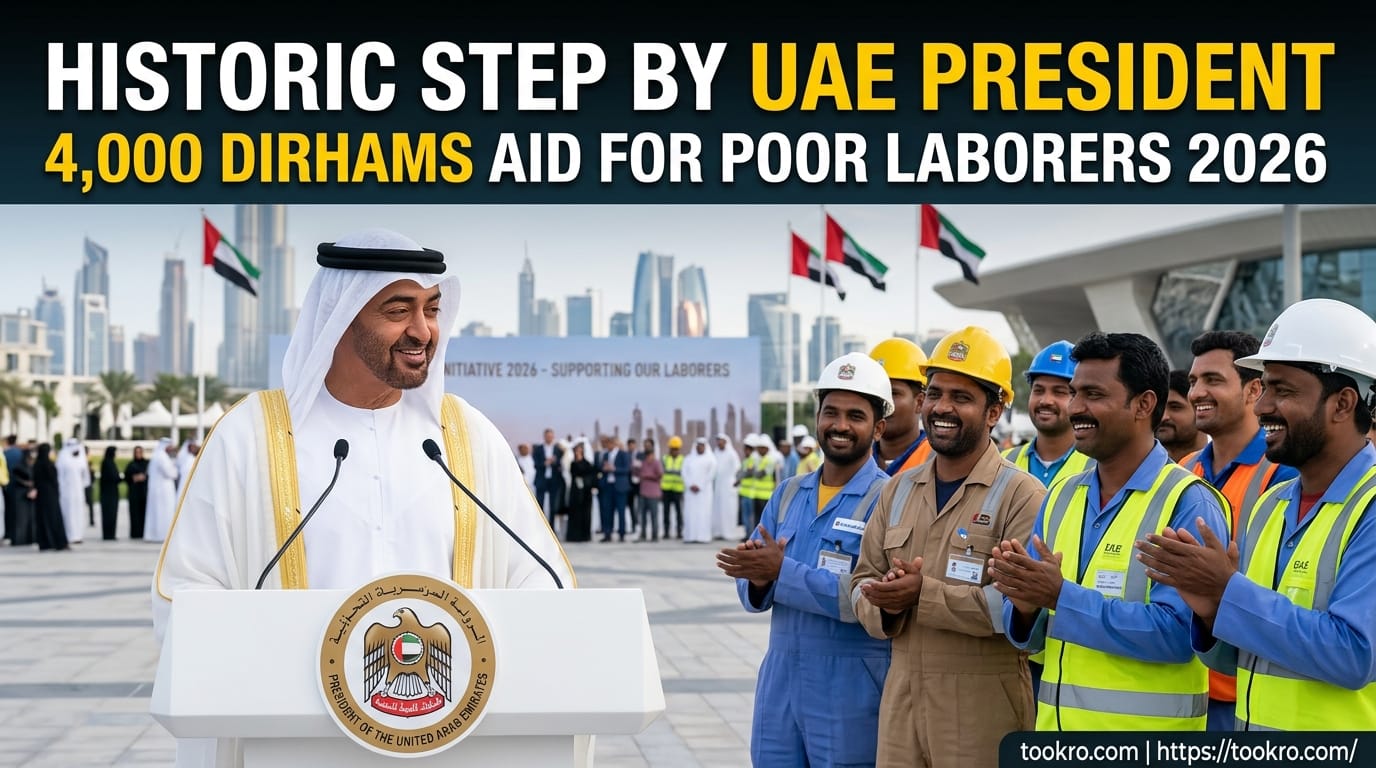
Imagine leaving your home, family, and country behind to work long hours under the hot sun, all to build a better future for your loved ones. Now, imagine the leader of the country you work in suddenly offering you a direct financial gift to ease your burdens.
This is exactly the reality for thousands of workers following a groundbreaking decision by the President of the United Arab Emirates (UAE). In an unprecedented move, the UAE government has announced a massive 4,000 Dirhams financial aid package aimed directly at supporting poor and low-income laborers.
This decision has made headlines across the globe, sending a strong message that the UAE deeply values the people who build its iconic skyscrapers, clean its streets, and keep its economy thriving. In this comprehensive guide, we will break down everything you need to know about this historic announcement, who qualifies, and how it is changing lives.
What is the 4,000 AED Laborer Aid Package?
At its core, this initiative is a direct financial assistance program designed to support the UAE’s blue-collar workforce. The government is giving 4,000 UAE Dirhams (AED) to eligible workers who struggle to meet their daily needs.
This aid primarily targets essential workers in physically demanding sectors, including:
Construction: The men and women who build the nation’s infrastructure.
Cleaning and Maintenance: Staff who keep public spaces, malls, and offices pristine.
Manufacturing: Factory workers in industrial zones.
Agriculture: Laborers working on local farms.
Domestic Work & Delivery: Helpers, warehouse staff, and delivery drivers.
Many of these workers come from countries like India, Pakistan, Bangladesh, the Philippines, and Nepal. Because they send the majority of their income back home, they often live on incredibly tight budgets within the UAE.
Why Did the UAE Leadership Take This Step?
The UAE is famous for its luxurious lifestyle and booming economy, but the leadership recognizes the daily struggles of its most vulnerable residents. Here is why the government launched this initiative:
1. Combating the Rising Cost of Living
Global inflation has affected everyone, and the UAE is no exception. The cost of basic groceries, public transportation, and healthcare has steadily increased. For a worker earning a minimum wage, even a tiny price hike can cause immense financial stress. This 4,000 AED package acts as a direct buffer against these rising costs.
2. A Compassionate Vision
The UAE has a long-standing tradition of humanitarianism. The leadership believes that a nation’s true greatness is measured by how it treats its working class. By offering direct cash aid, the government is ensuring that economic success does not leave the labor force behind.
3. Boosting Economic Stability
When workers are financially secure, they are healthier, happier, and more productive. This productivity directly benefits businesses and the broader economy, creating a win-win situation for everyone.
The True Value of 4,000 Dirhams
To understand the impact of this announcement, we have to look at what 4,000 AED actually means to a low-income worker. For many laborers earning between 800 and 1,500 Dirhams a month, this single payment is equivalent to nearly three months of their regular salary.
To put this into perspective, 4,000 AED is approximately equal to:
$1,090 US Dollars
90,000 Pakistani Rupees
91,000 Indian Rupees
120,000 Bangladeshi Taka
How This Money Changes Lives
For a migrant worker, this is a life-changing amount of money. It provides the breathing room needed to:
Clear outstanding debts owed to friends or local grocery stores.
Pay for several months of rent or accommodation fees.
Send a larger lump sum back to their home country to support their family.
Cover emergency medical bills for themselves or aging parents back home.
Pay for their children’s school fees and educational supplies.
Who Qualifies and How Will the Aid Be Distributed?
Eligibility Criteria
While the government is continuously fine-tuning the exact rules, the general qualifications include:
Income Bracket: Workers earning below a specific monthly threshold (typically minimum wage earners).
Legal Status: You must be a legally registered worker with a valid UAE residency visa.
Occupation: Employment in blue-collar sectors like construction, agriculture, domestic service, and cleaning.
Asset Check: Workers who do not own significant properties, businesses, or large assets.
A Transparent Distribution Process
The UAE government has promised a smooth, hassle-free distribution process so workers don’t have to navigate confusing paperwork. The funds are expected to be distributed through:
Direct Bank Transfers: Sending the money straight to the workers’ payroll accounts or issued payment cards.
Employer Coordination: Working with contracting companies to correctly identify eligible staff.
Government Databases: Utilizing records from the Ministry of Human Resources and Emiratisation (MOHRE) to locate the lowest-income earners.
A Historic Milestone for Labor Rights in the Gulf
This move is being hailed as an unprecedented benchmark in the Gulf Cooperation Council (GCC). While many Gulf countries—such as Saudi Arabia, Qatar, and Kuwait—have excellent welfare systems for their own citizens, direct cash handouts specifically targeting migrant workers are incredibly rare.
International human rights and labor organizations have widely praised the UAE for this decision, noting that it sets a new, compassionate standard for the entire region.
Part of a Broader Welfare Framework
It is important to note that this 4,000 Dirham aid is not an isolated event. It is the latest addition to the UAE’s robust worker protection system, which already includes:
The Wage Protection System (WPS): A digital system that ensures workers are paid their salaries fully and on time.
The Midday Break (Heat Ban): A strict law banning outdoor physical labor during the hottest hours of the summer (usually June to September) to prevent heatstroke.
Improved Accommodation Standards: Strict regulations forcing employers to provide clean, spacious, and well-ventilated housing for laborers.
Official Government Portal
Serving Citizens with Integrity & Transparency
Important Notice: All information submitted through this portal is encrypted. Fields marked * are mandatory. Submitting false information is a criminal offence.
Essential Advice for Workers: Applying and Avoiding Scams
If you or someone you know is working in the UAE and might be eligible for this aid, here is some practical advice:
How to Check Your Status
Rely only on official announcements from the UAE government and MOHRE.
Speak directly with your company’s HR department or camp boss.
Use the official MOHRE mobile app or customer service hotline for accurate updates.
Documents to Keep Ready
Make sure your basic paperwork is up to date. You will likely need your:
Valid Emirates ID
Active UAE Residence Visa / Work Permit
Official Employment Contract
Active Bank Account Details
⚠️ Beware of Scammers
Unfortunately, scammers often try to steal money during government aid rollouts. Please remember: The UAE government will NEVER ask you to pay a fee to receive your aid. Do not share your bank OTP (One-Time Password) with anyone, and ignore WhatsApp messages or unofficial links claiming they can “fast-track” your application for a small payment.
Frequently Asked Questions (FAQs)
1. What is the 4,000 AED aid program? It is a special financial relief package introduced by the UAE President to provide 4,000 Dirhams in direct cash assistance to low-income migrant laborers working in the country.
2. Which nationalities can receive this money? The aid is entirely nationality-blind. Whether you are from India, Pakistan, Bangladesh, the Philippines, or anywhere else, you can qualify as long as you legally work in the UAE and meet the low-income criteria.
3. Will accepting this aid affect my visa or job? Absolutely not. This is a humanitarian welfare initiative. Receiving this money will not negatively impact your employment status, residency visa, or future in the UAE.
4. Is this going to be a monthly payment? Currently, official announcements present this as a special, one-time financial relief initiative rather than a permanent monthly salary increase.
5. What should I do if I qualify but haven’t received the money? If you meet all the criteria but haven’t seen the funds, your best step is to contact the Ministry of Human Resources and Emiratisation (MOHRE) via their official helpline or website. You can also consult your company’s HR department for guidance.
Conclusion
The UAE President’s decision to grant 4,000 Dirhams to low-income laborers is much more than a simple financial handout; it is a profound statement of empathy. It proves that behind the dazzling skyline of Dubai and the cultural heritage of Abu Dhabi are leaders who recognize the sweat and sacrifice of the working class.
For the laborers, this money represents relief from anxiety and a brighter season for their families back home. For the UAE, it cements its global reputation as a progressive, compassionate, and forward-thinking nation that honors human dignity above all else. True progress isn’t just about building the world’s tallest towers—it’s about uplifting the people who build them.